Parker Hartmann · 5 September 2026
Westmoor’s Volunteer Network Coordinates Emergency Response Training for Rural Households
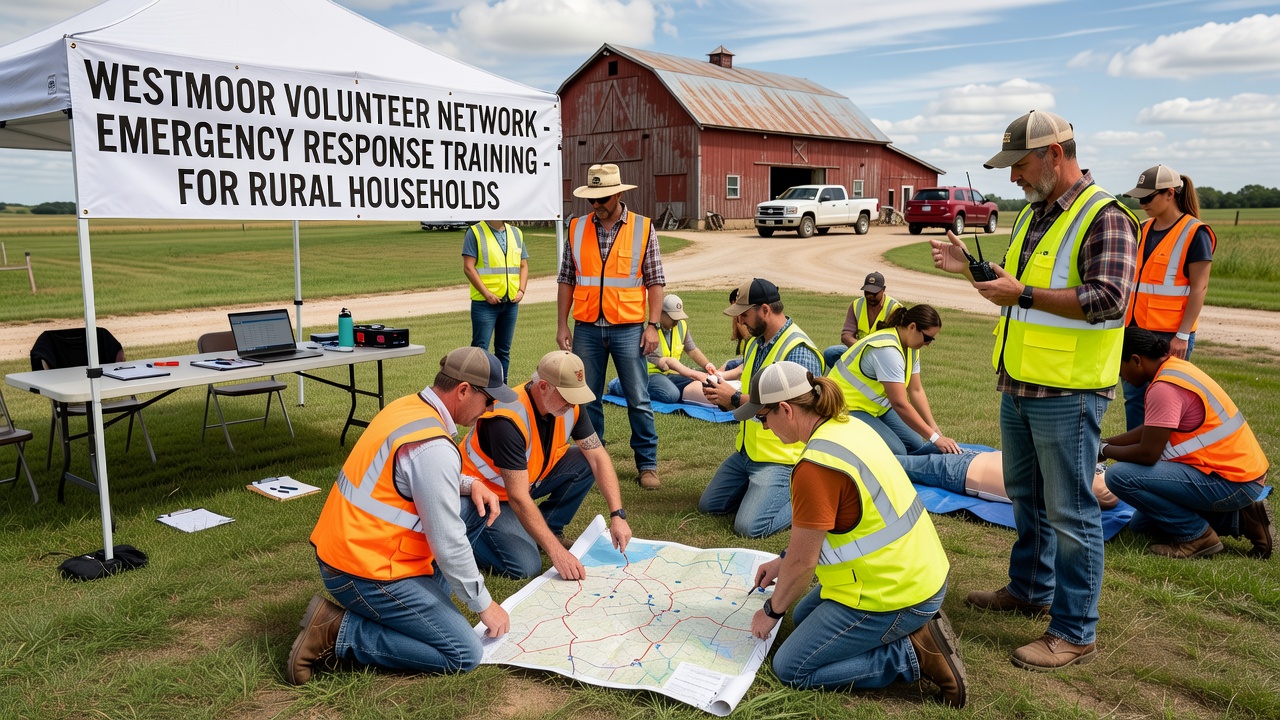
Westmoor’s volunteer network brings together local residents who coordinate emergency response training programs specifically designed for households in rural areas, and these initiatives focus on practical skills that address challenges unique to isolated locations such as limited access to services during floods or power outages.
Data from the UK Office for National Statistics shows rural communities face longer response times in emergencies, which is why the network organizes regular sessions that cover first aid, evacuation planning, and communication strategies using basic equipment like radios and satellite phones.
Training Programs and Schedule Details
The network schedules training throughout the year with a notable series planned for September 2026 that includes hands-on workshops at village halls across teh Westmoor region, and participants learn to assess risks like flooding from the nearby marshes while practicing techniques to secure livestock and secure family supplies.
Researchers at the University of Exeter have documented how such community-led programs improve household preparedness, and their reports indicate participants retain skills longer when training incorporates local geography and weather patterns rather than generic advice.
One session covers wildfire prevention because dry spells have increased in recent years according to Met Office records, while another focuses on medical response for injuries sustained far from hospitals, and volunteers demonstrate tourniquet application alongside CPR updates aligned with guidelines from the American Heart Association.
Coordination with External Partners
Westmoor volunteers collaborate with county emergency services to align their efforts with official protocols, yet they maintain independence that allows quick adaptation to neighborhood-specific needs such as narrow lanes that hinder large vehicle access.
Similar networks in other regions provide useful comparisons, and data from Public Safety Canada reveals rural training programs reduce injury rates by up to 25 percent when households practice drills regularly, a finding echoed in Australian studies on bushfire preparedness.
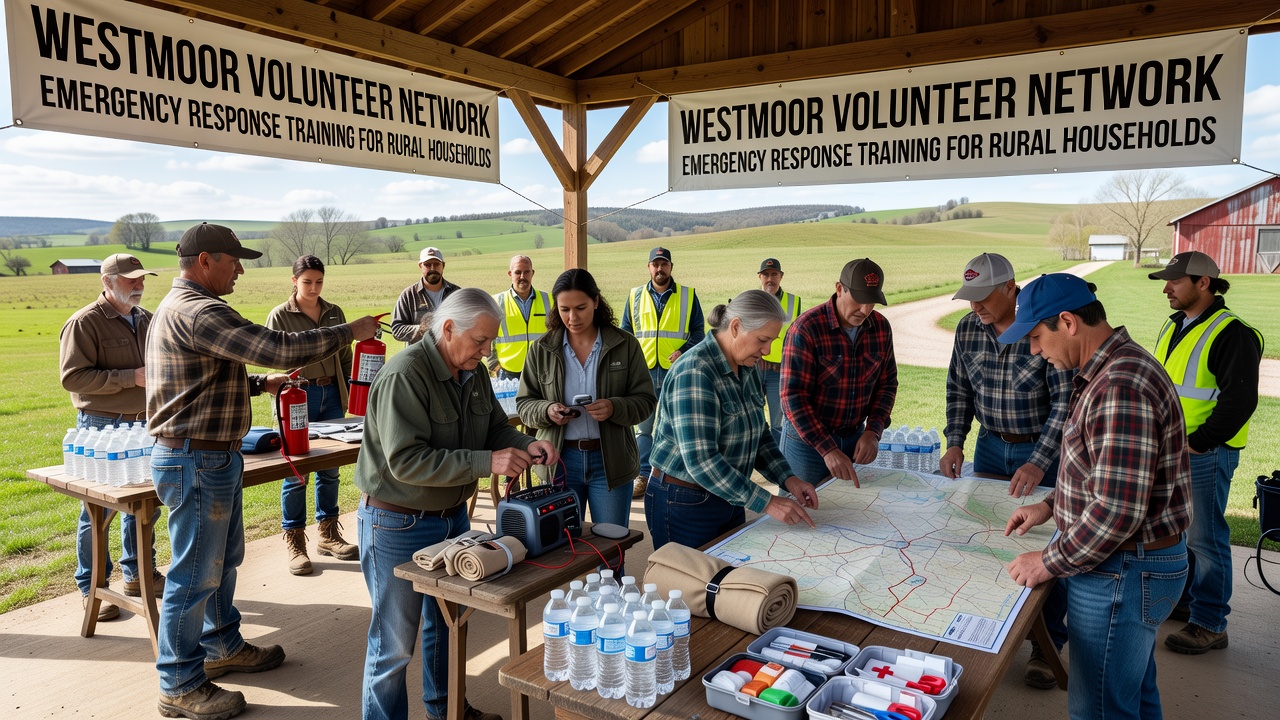
Volunteers also distribute printed guides and digital resources that households can review at home, and these materials include checklists for emergency kits tailored to families with children or elderly members who require specific medications during extended isolation.
Impact on Rural Communities
Households that complete the training report higher confidence in handling minor incidents without external help, and this self-reliance proves valuable during winter storms when roads become impassable for days at a time.
Local records indicate the network has trained over 400 residents since its expansion two years ago, and follow-up surveys show sustained use of skills like water purification and basic wound care in everyday situations as well as crises.
Partnerships with schools introduce younger residents to the programs early, which creates a pipeline of future volunteers while embedding safety awareness across generations in the area.
Future Developments and Participation
Plans for 2026 include expanded online modules that complement in-person sessions, allowing those with mobility limitations to access core content before attending practical assessments, and the network continues to recruit coordinators from surrounding farms and hamlets to ensure coverage remains broad.
Evidence from multiple international sources confirms community networks like this one strengthen overall resilience, and Westmoor’s approach integrates lessons from both UK and overseas examples to refine its methods continuously.
Conclusion
The volunteer network demonstrates how coordinated local efforts deliver targeted emergency training that meets the distinct requirements of rural households, and its ongoing programs through 2026 will continue building practical capabilities across the community.