Paul Russell · 19 September 2026
Westmoor Stargazing Club Documents Rare Celestial Events This Season
The Westmoor Stargazing Club has compiled detailed records of several rare celestial events observed throughout the current season, with observations spanning multiple locations across the region and extending into September 2026, when a notable planetary alignment drew particular attention from members who coordinated viewing sessions at elevated sites around the moor, and data collected during these periods includes precise timings of meteor activity along with photographic evidence of transient phenomena such as lunar occultations that occurred when the moon passed in front of bright stars visible from northern latitudes.
Key Events Captured in Records
Club logs show that the Perseid meteor shower peaked in mid-August with rates reaching up to 60 meteors per hour under optimal dark-sky conditions, while additional activity from the Draconid shower followed in early October and produced sporadic fireballs that observers tracked across multiple nights; these entries also reference a partial lunar eclipse visible in late September 2026, during which the club stationed equipment at three separate vantage points to capture variations in shadow progression across the lunar surface, and cross-referenced timings with records from international networks to verify the sequence of contacts between the moon and Earth's shadow.
Further documentation covers a rare conjunction between Jupiter and Saturn that became prominent in the evening sky during November, with members noting the changing angular separation between the planets over successive weeks as they moved through the constellation Capricornus, and photographic sequences recorded the pair rising above the western horizon shortly after sunset on clear evenings when atmospheric conditions permitted extended viewing sessions without interference from local light sources.
Observation Methods and Equipment
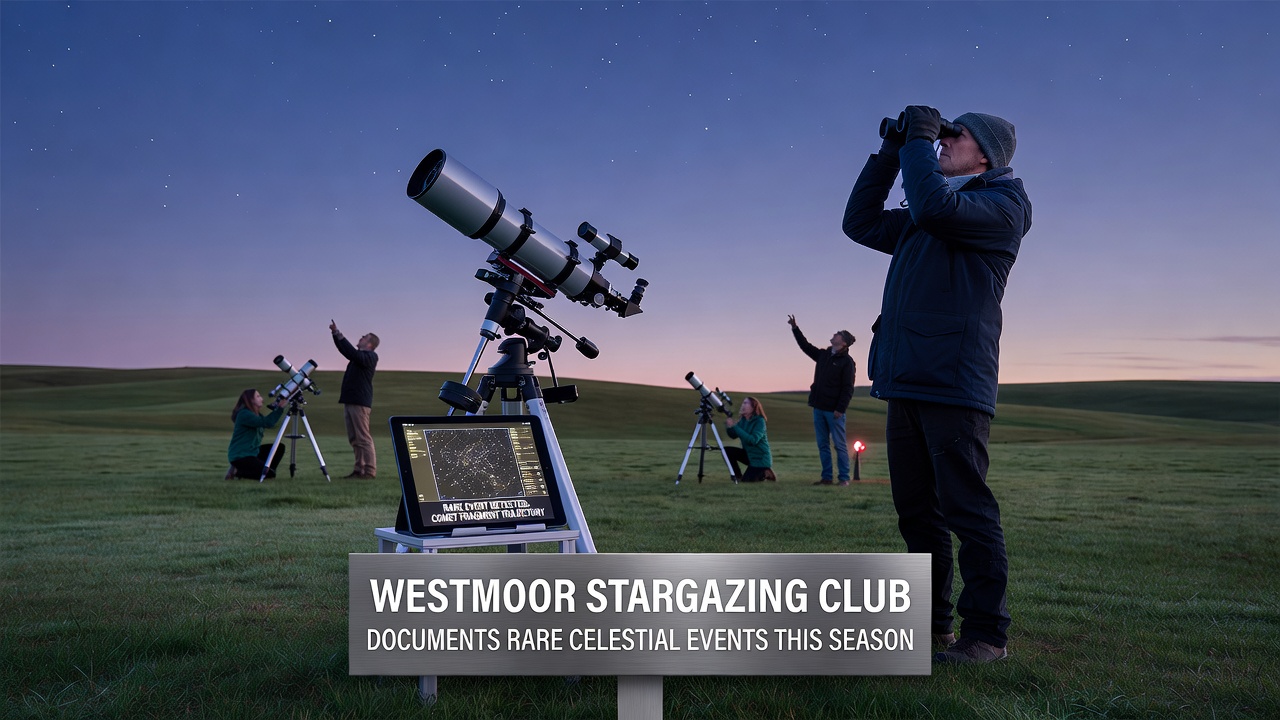
Members employed a combination of manual telescopes equipped with digital cameras and automated tracking mounts to record events, while software applications processed raw images to enhance details such as tail structures on comets and color variations in planetary atmospheres; the group maintained a shared database that logs coordinates, timestamps, and weather parameters for each session, which allows later analysis of patterns in visibility and supports comparisons with historical data collected in previous years at the same sites.
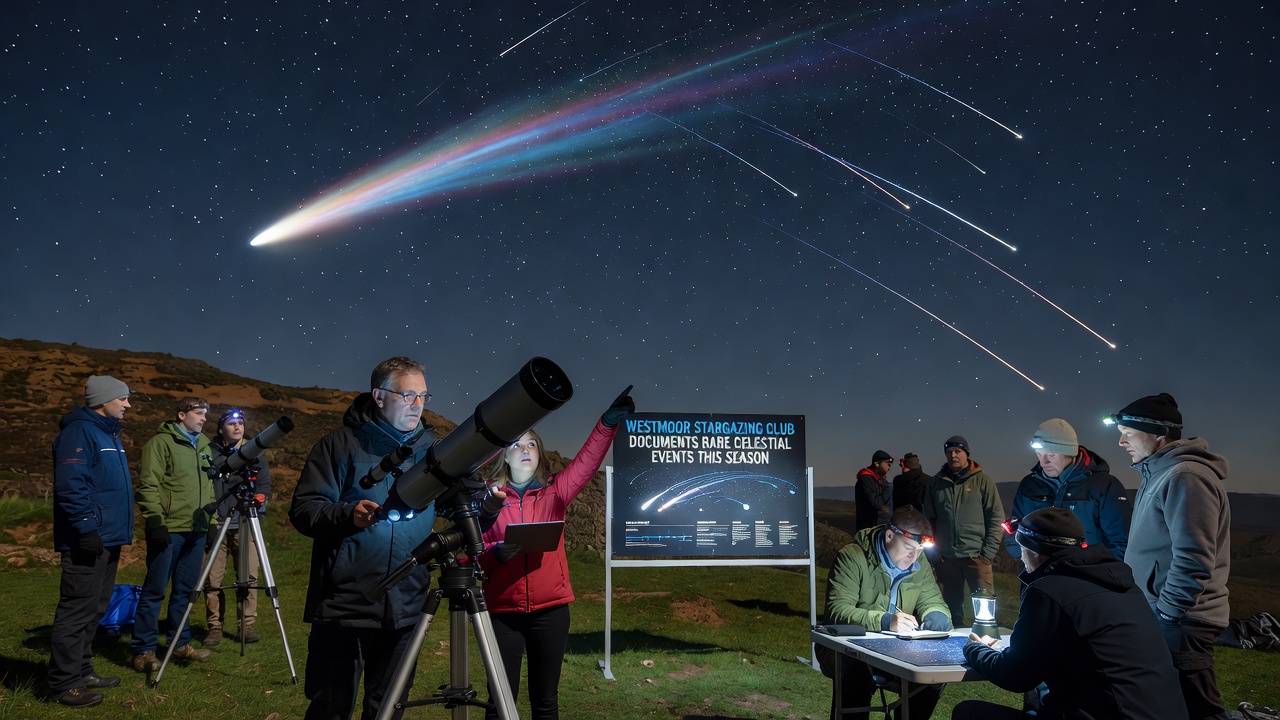
Training sessions held earlier in the year prepared newer participants to handle equipment safely and to recognize common celestial objects, which contributed to consistent data quality across different observers, and the club coordinated with local landowners to secure access to fields offering minimal light pollution during critical viewing windows, particularly around the September 2026 alignment when extended hours of observation required stable power sources for cameras and laptops used in real-time image processing.
Data Sharing and Collaborations
Records compiled by the club have been submitted to regional astronomy databases, where they contribute to broader studies of seasonal meteor activity and planetary movements, according to reports from NASA on similar observation networks operating across multiple continents, and one study published by the European Southern Observatory highlights how amateur contributions from groups like the Westmoor club help fill gaps in coverage between professional facilities located in the southern hemisphere.
Additional cross-checks with data from the Australian Astronomical Observatory have allowed members to compare local findings against southern-sky references, revealing consistent patterns in the timing of certain transient events that align with orbital mechanics models used by researchers worldwide, and the club's archive now includes timestamped entries for each documented occurrence along with metadata that supports future queries by students and independent analysts interested in seasonal variations.
Conclusion
Through systematic recording and equipment coordination, the Westmoor Stargazing Club has assembled a comprehensive set of observations covering the season's notable celestial activity, with particular emphasis on events around September 2026 that provided extended opportunities for data collection under favorable conditions, and these materials remain available for review through the club's established channels while supporting ongoing contributions to wider astronomical records maintained by established research organizations.